
Healthcare Workforce Roundtable with Rural Health Commissioner
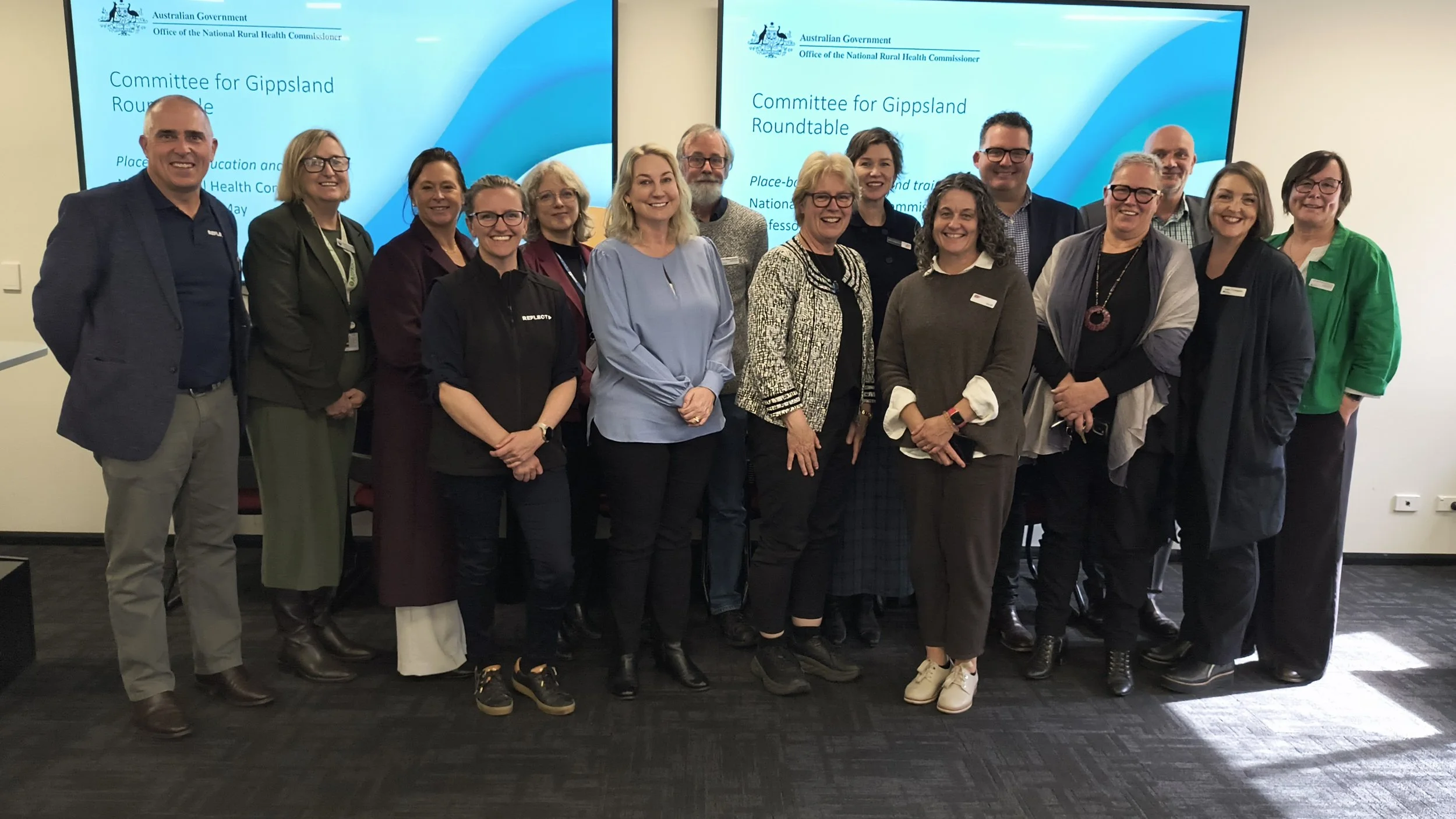
From left to right: Peter Smith (Reflect Consulting), Cathy Portelli (West Gippsland Healthcare Group), Louise Sparkes (Bayside Health), Ceinwen McCann (Reflect Consulting), Mikaela Power (Federation University), Rebecca Woodland (Gippsland Lakes Complete Health), Shane Bullock (Monash Rural Health), Prof Jenny May (National Rural Health Commissioner), Ann-Maree Kaser (Gippsland Lakes Complete Health), Sarah Corbell (Gippsland Womens Health), Tony Cantwell (Committee for Gippsland), Kate Graham (Gippsland Womens Health), Barry McIlwaine (Latrobe Regional Health), Kellie O’Callaghan (Regional Development Australia - Gippsland), Catherine Haigh (Monash Rural Health).
The National Rural Health Commissioner Professor Jenny May joined health leaders from across Gippsland for a roundtable hosted by Committee for Gippsland at the Monash Rural Health training facility in Warragul.
Prof May has built a distinguished career across rural and regional healthcare as a clinician, educator, policymaker and advocate, while continuing to practice as a GP. In her role as Rural Health Commissioner, she provides independent advice to the Australian Government on improving healthcare access, workforce sustainability and health outcomes in regional, rural and remote communities.
Committee for Gippsland CEO Tony Cantwell said the discussion highlighted the importance of long-term, place-based approaches to strengthening Gippsland’s healthcare workforce and services.
“Gippsland is experiencing significant change, with growing regional centres, an ageing population and increasing demand for healthcare services across the region,” Mr Cantwell said.
“Healthcare is already Gippsland’s largest employer, and ensuring we can attract, train and retain skilled workers locally will be critical to the region’s future.
“One of the key messages from the Commissioner was that regional communities achieve better long-term outcomes when education, training and workforce development are designed around local needs and delivered within the community itself.
“Prof May also shared practical examples from other regional areas where locally embedded training pathways, cadetships and employer-supported education programs are helping to build stronger and more sustainable health workforces,” he said.
Prof May said Gippsland’s network of regional centres created advantages for building and retaining a local healthcare workforce.
“For workforce training and retaining people in regional communities, Gippsland’s spread of regional centres is a very positive thing,” Prof May said.
“Rural health workforce development requires training that is embedded locally, with education designed alongside the community.
“It involves long-term investment in local people through cadetships, assistant roles, foundation programs and training pathways designed specifically for rural communities.
“Employer-based education will also be critical in equipping students with the practical skills they need, and it is important that health services work collaboratively and share expertise,” she said.
The roundtable also explored broader workforce challenges facing regional healthcare providers, including the need for multidisciplinary training models, flexible education pathways, improved support for women balancing work and caring responsibilities, and better transport access to help students attend placements and training opportunities across the region.
Committee for Gippsland thanked Prof May for visiting Gippsland and engaging directly with local stakeholders on the opportunities and challenges facing the region’s healthcare sector.